SUPERCONDUCTING POWER SYSTEMS
Composite systems for superconducting cables
Enoflex improves the cryogenic architecture inside superconducting cable systems, helping cable OEMs reduce coolant pressure drop, thermal movement and weight.
THE APPLICATION
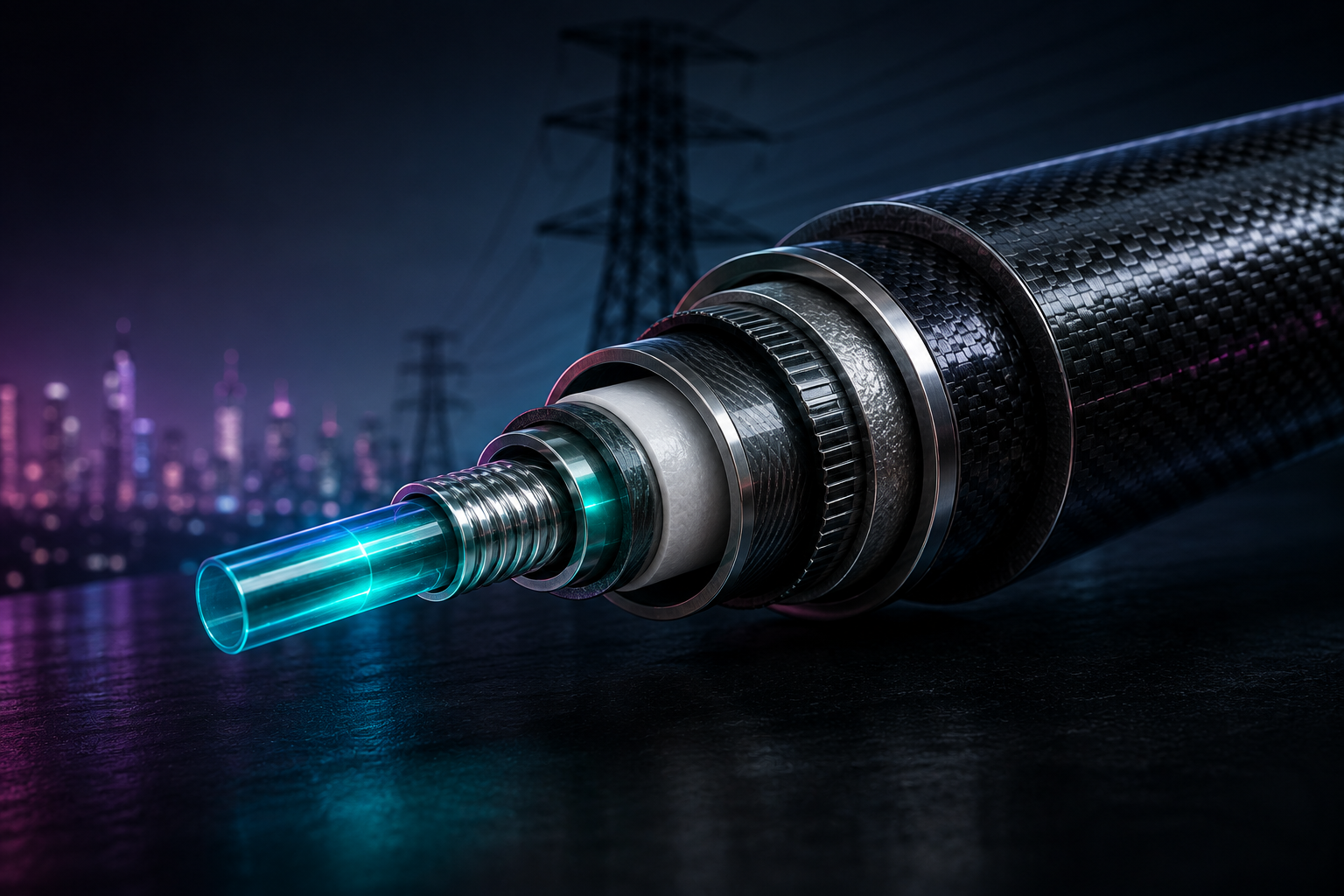
High-temperature superconducting (HTS) cables need continuous liquid nitrogen cooling to operate. That cooling runs through a cryostat, a pipe-in-pipe system that keeps the cable at -196°C along its full length.
The pipe architecture inside that cryostat determines how much energy is spent pumping coolant, how much stress the system takes on during thermal cycling, and how straightforward the installation is.
THE ENGINEERING CHALLENGE

Pressure drop
Corrugated bore increases pumping energy and cost.

Thermal contraction
Steel needs expansion loops that add complexity and failure points.

Weight
Heavier systems need more support structure.

Tight tolerances
Cable systems have little room for installation error.
ENOFLEX’S ROLE
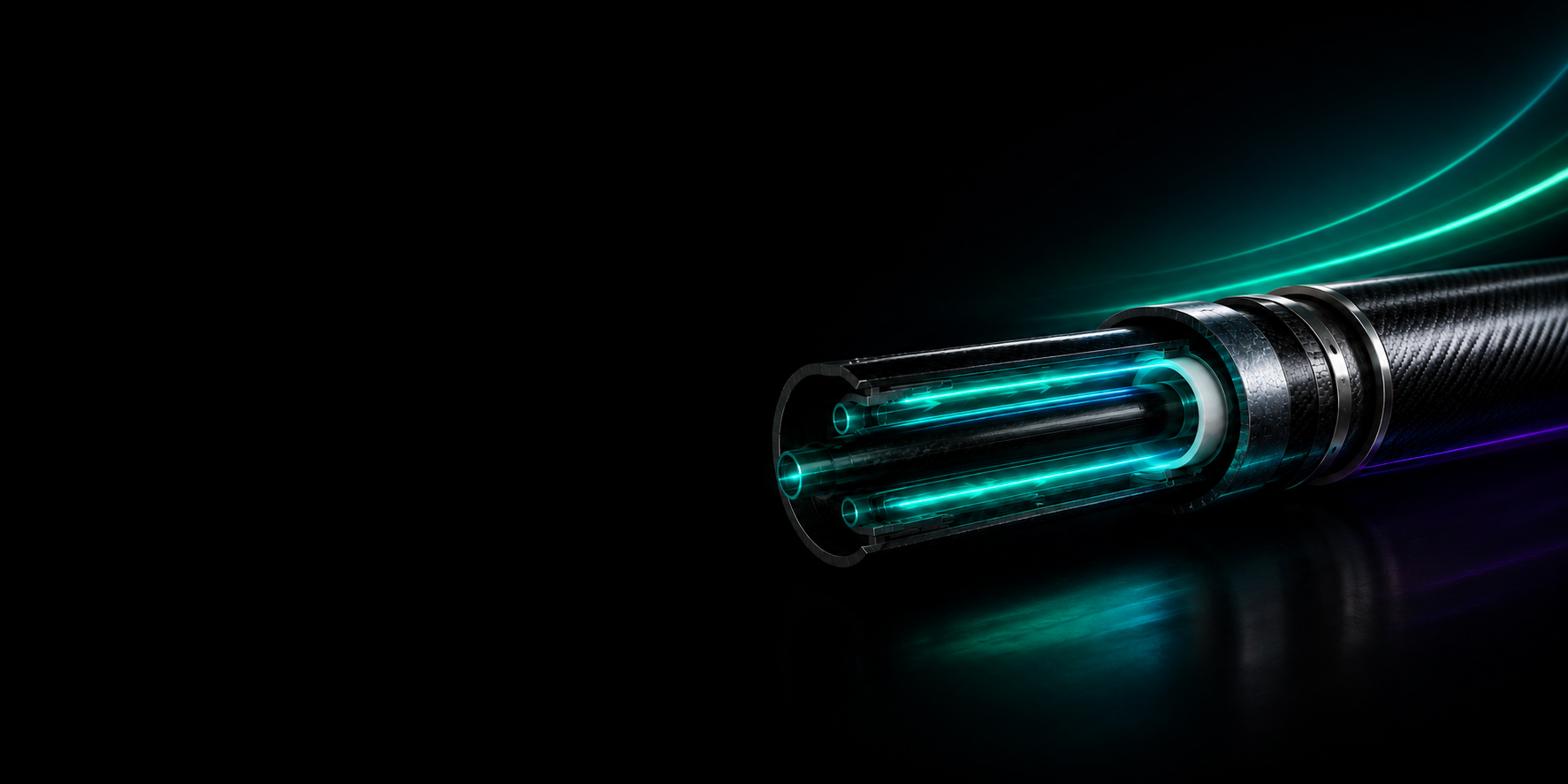
Enoflex supplies the composite former and cryogenic pipework that keep HTS cables cool with liquid nitrogen. The smooth bore and low thermal expansion of the composite reduce the pressure drop and thermal stress that corrugated steel systems carry.
WHY COMPOSITE
Smooth bore
Around 3x lower LN2 pressure drop than corrugated stainless steel.
Low CTE
Around 3x lower thermal contraction than steel.

Lightweight
Around 3x lighter than steel.
Reel-deployable
Pulled through in one length, no on-site welding.

USE CASE
Data centre power distribution
High-density power delivery with minimal losses.
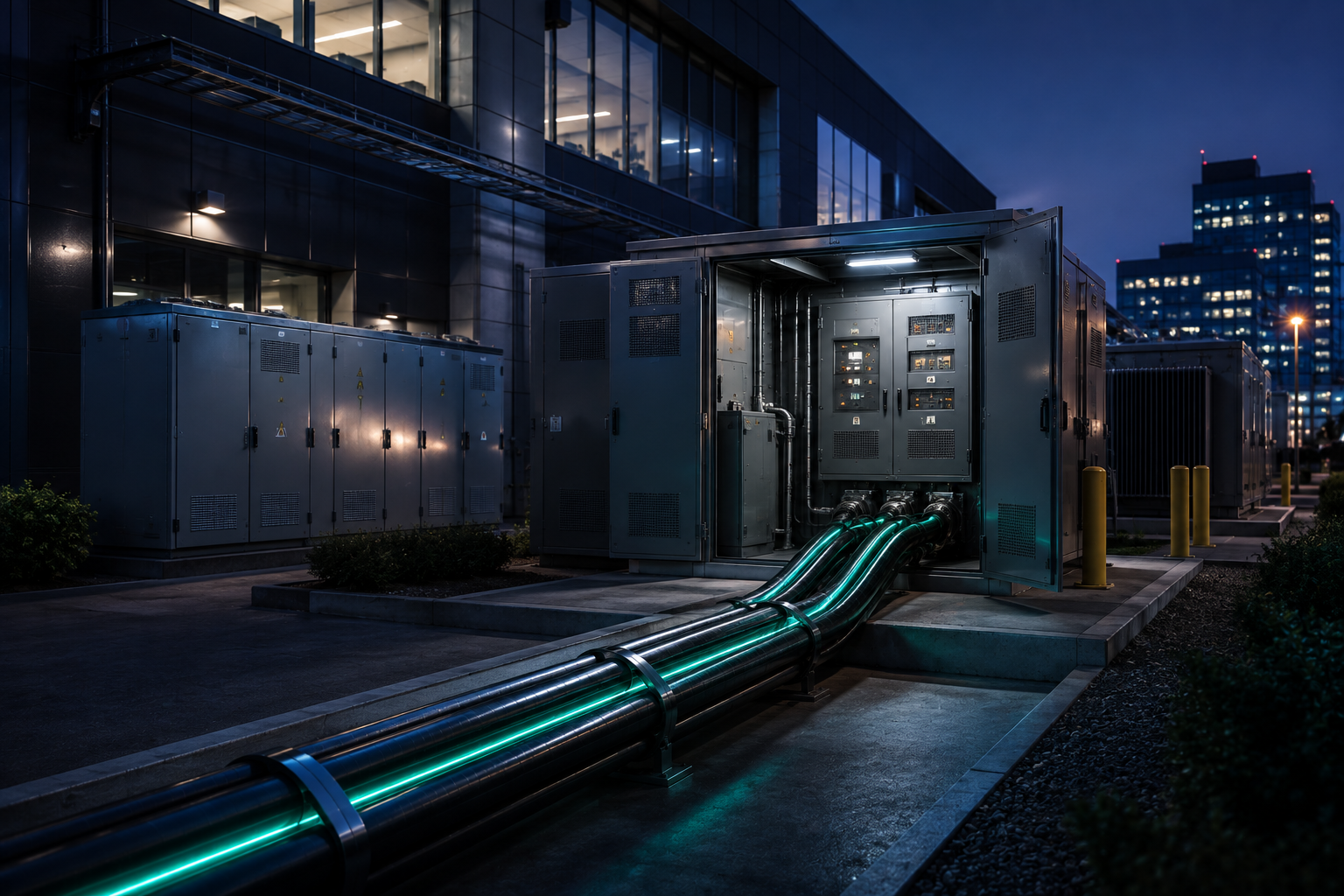
Behind-the-meter power infrastructure
More power in constrained spaces and complex environments.

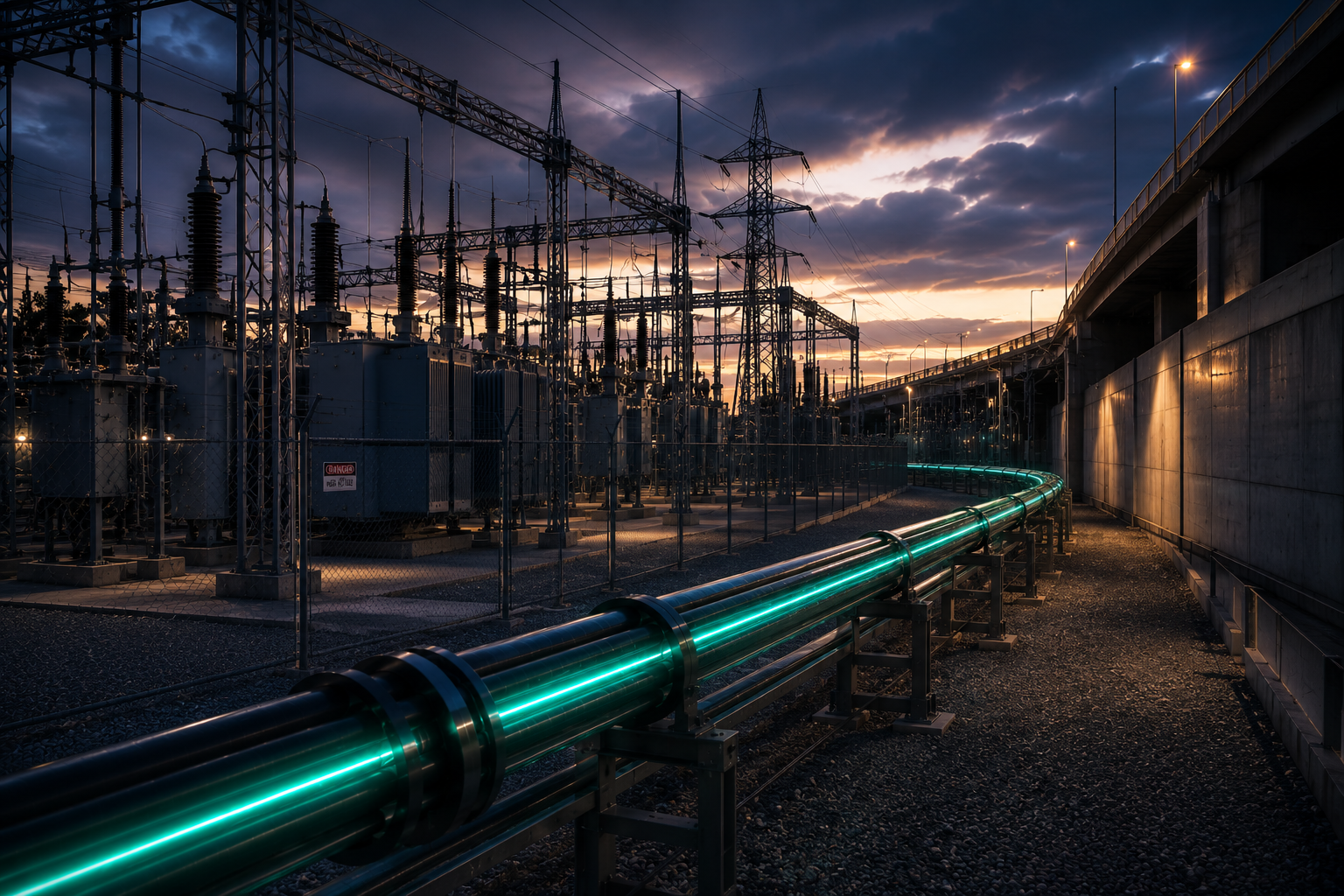
Urban grid upgrades
Increase capacity in existing routes where digging up roads isn’t practical.
Constrained power routes and substation links
High-power connections with limited routing options.
Designing a superconducting cooling infrastructure?
Request CryoReel® technical information for your system.
TECHNICAL RESOURCES